Understanding the Structure and Role of Modern Companies
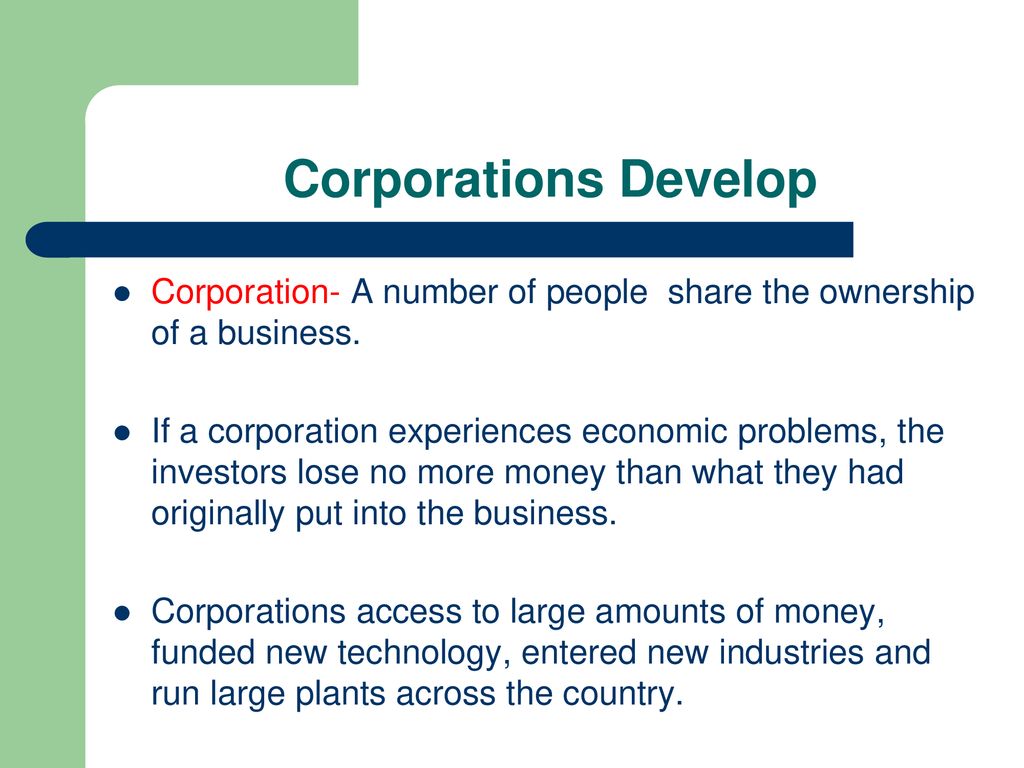
Firms are complex entities that play a crucial duty in the global economic climate. Defined as lawful entities unique from their proprietors, corporations can have residential or commercial property, incur financial debt, be and sue filed a claim against. This lawful framework permits a decrease in individual responsibility for business debts and threats, which is appealing to many entrepreneurs and capitalists. Commonly, firms are possessed by investors who invest money or various other properties in exchange for a portion of the possession, represented by stock shares. The management of a corporation is typically in the hands of execs and supervisors who are selected to guide the company towards success and growth. This splitting up of ownership and control can result in distinct obstacles, such as firm issues where the rate of interests of the managers could not constantly align with the passions of the investors.
The advancement of firms has actually contributed fit the economic landscape. From the Dutch East India Company, often pointed out as the very first true corporation, to the large international empires these days, the growth of companies has actually been intertwined with advancements in interaction, modern technology, and globalization. Modern corporations are not simply financial entities; they are effective actors on the political, social, and ecological phases. They affect public law and have a significant influence on the neighborhoods and environments in which they run. The rise of corporate social obligation initiatives shows the expanding recognition of the company and this influence's function in dealing with international obstacles such as climate change, inequality, and social justice. As firms continue to develop, their operations and methods are progressively inspected by the public, government regulatory authorities, and protestor financiers, causing a vibrant landscape of difficulties and chances.
Understanding the Framework and Operations of Modern Companies
Corporations, as facility and organized entities, play a pivotal role in the global economy, influencing everything from small local businesses to large-scale worldwide markets. At its core, a firm is a legal entity that is different from its proprietors, providing them restricted obligation in monetary matters, which indicates owners are not directly responsible for the business's obligations and financial obligations. This framework allows corporations to increase funding a lot more properly by issuing supply, which can be purchased and marketed by financiers, thus helping the company to invest and broaden without straight impacting the personal finances of its investors. Corporations are regulated by a board of directors, chosen by investors, which oversees significant choices and plans, ensuring that the business sticks to its mentioned objectives and lawful guidelines. Functional aspects of corporations differ widely relying on the market, dimension, and geographical reach of the firm. Internally, firms are separated right into various departments such as Human Resources, Finance, Advertising And Marketing, and Workflow, each supervised by senior supervisors that report to magnates like the CEO or President. This ordered structure assists in maintaining order, imposing policy, and making certain that the business runs smoothly and successfully. On construction companies in california missouri , corporations need to browse a complex internet of policies and competitive market forces. They participate in tactical preparation, market evaluation, and constant technology to stay affordable and pertinent. Moreover, business responsibility and honest service techniques have actually become significantly vital, as investors and customers alike demand transparency and fairness in organization procedures and ecological stewardship. The modern company setting thus demands not just economic savvy and service acumen but also a solid adherence to honest practices and a durable understanding of international trends and consumer behavior. As such, the capability of a firm to adapt to swiftly transforming environments and to innovatively tackle brand-new difficulties is crucial for its long-lasting success and sustainability.
Organizational Framework and Governance in Firms
In the intricate globe of modern-day companies, recognizing the business structure and governance mechanisms is vital for both inner management and outside stakeholders. A regular firm is regulated by a board of directors, which holds the best decision-making power and is responsible for looking after the general program of the organization, consisting of major company decisions and policy solutions. This board is elected by investors, that are the actual owners of the corporation. Their ballots are symmetrical to the variety of shares they hold, offering better impact to those with bigger investments. Below the board, the company power structure usually branches right into various departments such as Human Resources, Finance, Procedures, and Advertising and marketing, each led by senior execs who handle the everyday procedures and record straight to a President (CEO). The chief executive officer works as the web link in between the board and the firm's operational side, carrying out the board's methods and making sure that the business satisfies its goals and objectives. This layered structure helps with specialized emphasis on various company areas, enabling even more refined strategies and better oversight. These administration structures are not just crucial for reliable operational administration but additionally play a substantial function in keeping governing compliance and safeguarding financier confidence. By adhering to established governance practices, corporations not just boost their performance and performance but additionally boost their reputation in the market, which is essential in today's affordable organization setting.
Business Framework and Governance
In the world of organization, the structure and administration of a corporation are essential in shaping its operations, society, and tactical instructions. Basically, the corporate framework identifies how different departments and devices are arranged, helping with functional efficiency and clarity in reporting pecking orders. Governance, on the various other hand, entails the structures and processes whereby a corporation is controlled and routed, making certain that it sticks to regulations, policies, and interior policies, while additionally fulfilling the expectations of its stakeholders. At the core of a company's administration is its board of directors, a team of individuals chosen by shareholders to oversee the wide plans and direction of the business. The board's duties consist of assigning elderly monitoring, such as the CEO, and making pivotal strategic choices that influence the future of the firm. Effective governance is critical for keeping company honesty and public trust fund, which in turn can substantially impact the company's monetary efficiency and market credibility. In today's globalized market, corporations deal with boosting analysis regarding their administration techniques, with an expanding emphasis on locations such as executive payment, investor legal rights, and company liability. This analysis usually drives firms to constantly assess and improve their administration strategies to not only abide by legal demands yet likewise to sustain competitive benefit and foster long-lasting shareholder worth.
Strategic Initiatives and Future Expectation
Over the last few years, the corporation has embarked on a series of strategic initiatives focused on bolstering its market placement, enhancing operational efficiencies, and ensuring lasting development in a quickly evolving global landscape. These efforts have actually centered around buying innovative modern technology, increasing into brand-new markets, and forging strategic collaborations. By leveraging man-made knowledge and artificial intelligence, the corporation has actually considerably enhanced its supply chain monitoring and client service, causing decreased functional costs and boosted client contentment. Moreover, the focus on sustainability has brought about the development of greener products and processes, which not only follow global environmental criteria but likewise resonate well with the ecologically conscious consumer base. Looking ahead, the company prepares to continue its growth into emerging markets, especially in Asia and Africa, where raising urbanization and customer costs are anticipated to drive demand for its products. The firm is exploring chances in the digital space, including ecommerce and cybersecurity, which are anticipated to be vital elements in the future of business. This strategic direction is sustained by a durable financial strategy, aimed at maintaining a healthy and balanced equilibrium sheet while pursuing hostile growth opportunities. Generally, the company's forward-thinking method and flexibility to alter are vital vehicle drivers that will likely move its success in the coming years.